Call Us
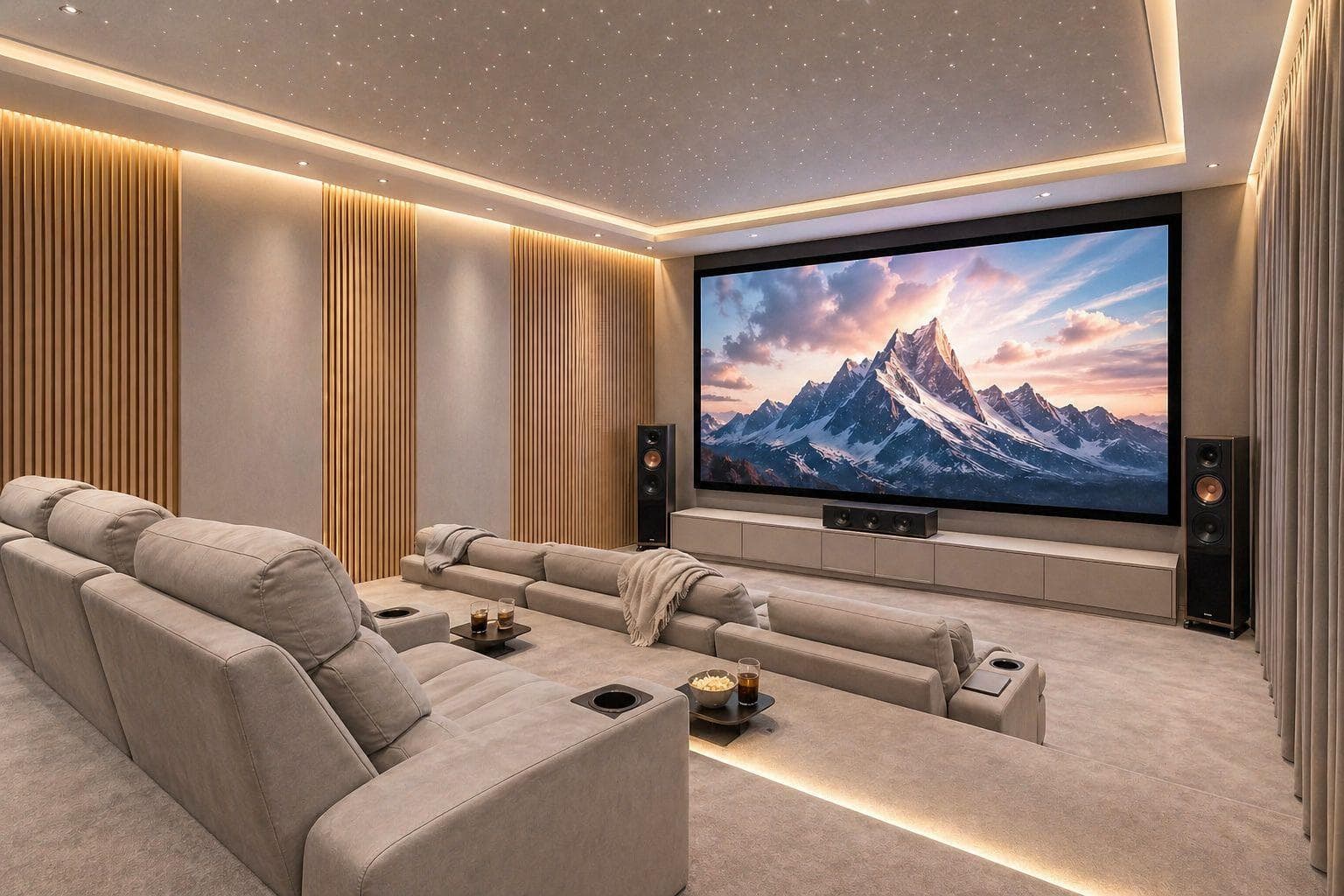
The most striking audio installations we design have no visible hardware at all. Speakers vanish into the ceiling, the grille painted the same shade as the plaster; subwoofers hide inside built-in joinery; amplifiers live in a small, ventilated rack the client never has to see.
Acoustics decide the room, not the brand
Even a reference-grade speaker can be undone by a hard, symmetrical room. We treat acoustic modelling as part of the architectural drawings — mapping standing waves, choosing driver positions to complement the seating, and using diffusion where the interior designer's finishes create too much reflection.
Zones that follow the household
Once the hardware disappears, the control layer does the heavy lifting: the kitchen picks up the podcast from the study, the pool speakers fade in as the terrace doors open, and the primary bedroom stays at its own low volume regardless of what the rest of the house is doing.
Ready to hear the room without seeing the hardware?